
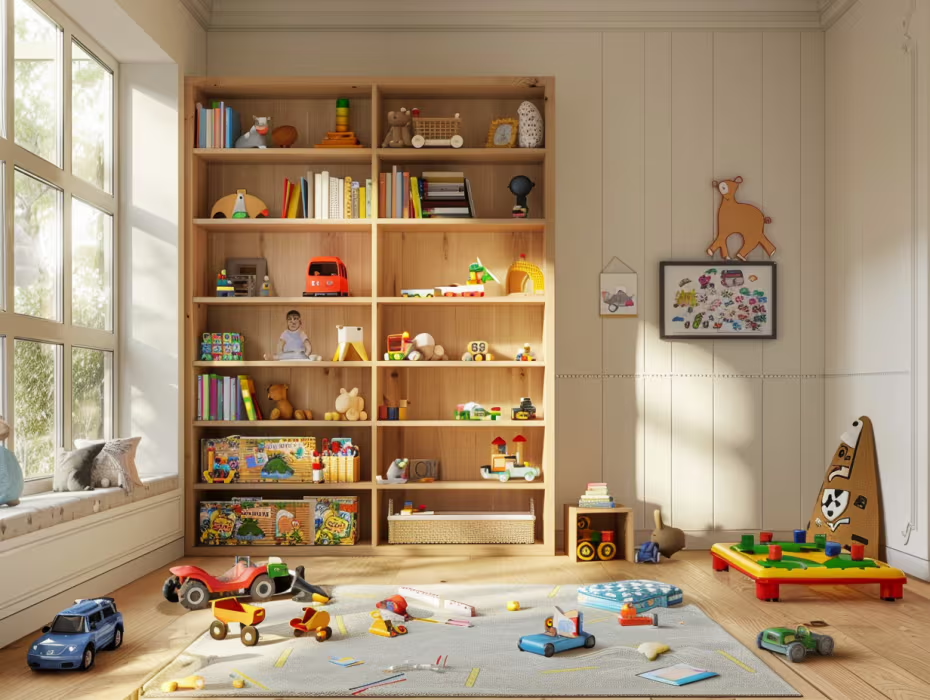
A child’s bedroom can go from calm to chaos in less time than it takes to make a cup of coffee. The problem is not always too many toys, too many clothes, or too little space; it is often that the room asks a child to clean like an adult. Good kids storage ideas work because they match small hands, short attention spans, and busy family routines. A bedroom that resets fast gives everyone breathing room, especially in American homes where one room may serve as a sleep space, play zone, homework corner, and weekend dumping ground. Parents looking for practical home improvement support can also find smart inspiration through organized family living ideas that make everyday spaces easier to manage. The real goal is not a perfect room. Perfect rooms rarely survive Tuesday afternoon. The better goal is a bedroom where cleanup feels possible, the floor stays safer, and your child can find what they need without calling your name from across the house.
Kids Storage Ideas That Match How Children Actually Use a Room
Storage fails when it looks nice but ignores the way children move through a bedroom. A child drops things near the door, changes clothes wherever the mood hits, and pulls out five toys to play with one. That is not laziness. That is normal behavior, and the room needs to answer it with systems that are close, visible, and easy to repeat.
Why low storage works better than tall furniture
Low shelves do more than make a room look open. They give your child a clear place to return books, blocks, stuffed animals, and art supplies without needing help. A tall dresser may please an adult eye, but it often turns cleanup into a parent-managed task. Once a child cannot reach the right spot, the floor becomes the backup plan.
In a typical U.S. bedroom shared by two siblings, a low cube shelf can separate toys by type without creating a fight over whose things belong where. One bin can hold cars, another can hold dress-up pieces, and another can hold building toys. The trick is to use fewer categories than you think you need, because children clean faster when the choice is obvious.
The unexpected part is that open storage can make a room look cleaner than hidden storage. Closed drawers invite mystery piles. Open cubes expose the mess early, which means you fix it before it turns into a Saturday project nobody wants.
How to create drop zones children can maintain
Every child’s room needs a landing place for the stuff that enters with them. Shoes, backpacks, library books, sports gear, and half-finished crafts need a home near the point of entry. Without that drop zone, those items travel across the room and multiply like crumbs under a car seat.
A simple wall hook, a shallow basket, and a small tray can do more than a full storage wall. The hook catches tomorrow’s hoodie. The basket holds shoes or soccer shin guards. The tray keeps tiny objects from disappearing into bedding. That small setup trains the room to catch clutter before it spreads.
Bedroom storage for kids works best when it removes the need for memory. A child should not have to think, “Where does this go?” every time they enter the room. The answer should sit in plain sight, close enough that putting it away feels easier than dropping it.
Build Zones Instead of Chasing Every Mess
A cleaner child’s bedroom is rarely built from one big cleanup. It comes from clear zones that limit where each kind of activity happens. Sleep, play, clothes, books, and school items all need their own small territory. Once the room has boundaries, the mess stops feeling like one giant problem.
Toy storage solutions that support real play
Toy storage solutions should protect play, not shut it down. A child who loves toy animals, train tracks, or dolls needs enough access to build a world without emptying every container. Clear bins, picture labels, and shallow baskets help them see choices without digging through a deep plastic tub.
One strong method is the “active toy shelf.” Keep the toys your child currently loves on a low shelf, then store the rest in a closet or under-bed bin. Rotate items every few weeks. This keeps the room fresher without buying more, and it reduces the cleanup load after each play session.
Toy storage solutions also teach decision-making. When the animal bin is full, your child has to choose what stays. That gentle limit works better than a lecture about clutter. The container becomes the rule, and the rule does not sound like a parent losing patience.
Book corners that do not turn into floor piles
Books deserve better than a leaning tower beside the bed. Children often read in bursts, grab favorites repeatedly, and toss finished books near pillows. A small book ledge, sling shelf, or front-facing rack helps them return books without lining up spines like a library assistant.
In many American homes, bedtime reading happens in the same corner where stuffed animals, blankets, and nightlights gather. That area needs soft control. A basket beside the bed can hold current favorites, while a shelf across the room stores the rest. This keeps the bedtime zone cozy without turning it into a paper landslide.
A counterintuitive move is to store fewer books in the room. That does not mean owning fewer books. It means giving the bedroom a working set. The rest can live in a hallway shelf, family room, or closet bin until the next swap.
Make Closets and Drawers Easier Than the Floor
Clothes create some of the worst bedroom mess because children change fast, reject outfits fast, and forget what is clean. A closet or dresser should not demand folding perfection. It should make the easiest action the right one. When the system forgives rough handling, it survives school mornings.
Closet organization for children that reduces morning stress
Closet organization for children starts with lowering the bar, sometimes in a physical sense. A second hanging rod at child height can hold school shirts, jackets, or weekly outfits. When children can reach their clothes, they gain independence and stop pulling down half the closet to find one sweatshirt.
Day-of-the-week bins can help families with early bus schedules, uniforms, or shared custody routines. Each bin holds one outfit, socks included. Sunday evening becomes the planning moment, while weekday mornings become quieter. Not silent, perhaps. But quieter counts.
Closet organization for children should also include a “not today” space. This can be a basket for clothes that are clean but rejected, seasonal, or waiting for a parent decision. Without that middle zone, those pieces drift to the floor and get washed again for no reason.
Drawer systems that survive child-level folding
Perfect folding is overrated in a child’s room. File-folded shirts can look great on Sunday and collapse by Wednesday. Some families do better with drawer dividers, small fabric bins, or broad categories like tops, bottoms, pajamas, and socks. The aim is retrieval, not display.
A dresser becomes easier when each drawer has one job. Pajamas should not share space with shorts, craft aprons, and swim goggles. When categories blur, children rummage. When children rummage, the floor pays the price.
Small bedroom organization often depends on using drawer space with mercy. Roll pajamas instead of folding them. Pair socks in a small bin. Keep fancy clothes out of daily drawers if they are not used often. The system should match the child you have, not the showroom photo you saved at midnight.
Use Hidden Space Without Hiding the System
Small bedrooms can still stay clean when hidden storage is planned with care. Under-bed bins, wall shelves, door organizers, and bench seats can carry a lot of weight. The danger comes when hidden spaces become clutter caves. Hidden storage only works when every spot has a clear purpose.
Under-bed storage that stays useful
Under-bed bins are perfect for items children use sometimes, not daily. Seasonal clothes, extra blankets, costumes, sports gear, and rotated toys fit well there. Daily items belong where children can reach them without kneeling, dragging, and forgetting to push the bin back.
Use shallow bins with wheels or handles whenever possible. Deep bins invite buried layers, and buried layers become lost items. A label on the outside helps, but a clear lid helps even more. Children trust what they can see.
Small bedroom organization gets easier when under-bed storage supports the room instead of swallowing it. In a small apartment bedroom in Chicago, for example, one under-bed bin for winter accessories and one for rotated toys can free the closet for daily clothes. That is a better trade than stuffing everything under the mattress and hoping nobody checks.
Wall and door storage that frees the floor
Walls can hold more than posters. Peg rails, floating shelves, fabric pockets, and over-door organizers lift clutter without taking walking space. This matters in smaller bedrooms where one misplaced laundry basket can block a closet or make a bunk bed ladder harder to reach.
The best wall storage has limits. A few hooks for hats and bags work well. A wall packed with baskets can become visual noise and make the room feel busier. Children need calm cues as much as they need capacity.
Bedroom storage for kids should leave the center of the room open enough for play and movement. Floor space is not empty space. It is where children build forts, spread puzzles, practice dance routines, and become themselves for a while.
Conclusion
Cleaner bedrooms do not come from stricter rules alone. They come from rooms that respect how children think, reach, choose, and forget. Parents often blame themselves for the mess, then buy more bins, then wonder why the same piles return. The missing piece is usually not effort. It is fit.
Start by watching your child move through the room for one normal day. Notice where clothes land, where toys gather, where books pile up, and where school items disappear. Then place storage where the mess already happens. That single shift can change the room faster than a full weekend overhaul.
The strongest kids storage ideas are not the fanciest ones. They are the ones your child can repeat without a speech, a reminder, or a parent standing in the doorway. Choose one zone this week, fix it with a simple system, and let the bedroom become easier one decision at a time.
Frequently Asked Questions
What are the best storage ideas for a small kids bedroom?
Use low cube shelves, under-bed bins, wall hooks, and door organizers to keep the floor open. Choose storage that matches daily habits first. Seasonal items can go under the bed, while toys, books, and clothes used often should stay easy to reach.
How can I organize toys in a child’s bedroom without buying more furniture?
Sort toys into broad groups and use baskets, bins, or containers you already own. Keep only current favorites in the room and rotate the rest from a closet. Fewer visible toys make cleanup faster and help children play with more focus.
How do I keep my child’s bedroom clean every day?
Create a five-minute reset routine before dinner or bedtime. Give every common item a simple home, such as hooks for clothes, bins for toys, and a basket for books. Daily cleanup works best when the room is easy to reset.
What storage works best for kids who share a bedroom?
Give each child a personal bin, drawer, hook, or shelf section. Shared toy storage can work, but personal items need clear boundaries. Labels, colors, or picture tags help reduce arguments and make cleanup fair for both children.
How can I organize kids clothes without perfect folding?
Use simple categories like shirts, pants, pajamas, socks, and school clothes. Drawer dividers or small bins keep items separated even when folding gets messy. Children usually manage clothing better when the system allows quick sorting instead of perfect stacks.
Are open shelves better than closed bins for children’s rooms?
Open shelves work well for items children use daily because they can see and return things fast. Closed bins work better for rotated toys, seasonal clothes, or clutter-prone items. A mix of both usually gives the cleanest result.
How do I make a kids closet easier to use?
Add a lower hanging rod, reachable baskets, and simple labels. Keep daily clothes at child height and move rarely used items higher. A small basket for rejected or not-yet-dirty clothes can also stop floor piles from growing.
What should I store under a child’s bed?
Store items that are useful but not needed every day, such as seasonal clothes, extra bedding, costumes, keepsakes, or rotated toys. Use shallow, labeled bins with handles. Avoid putting daily toys under the bed because children may not return them neatly.