
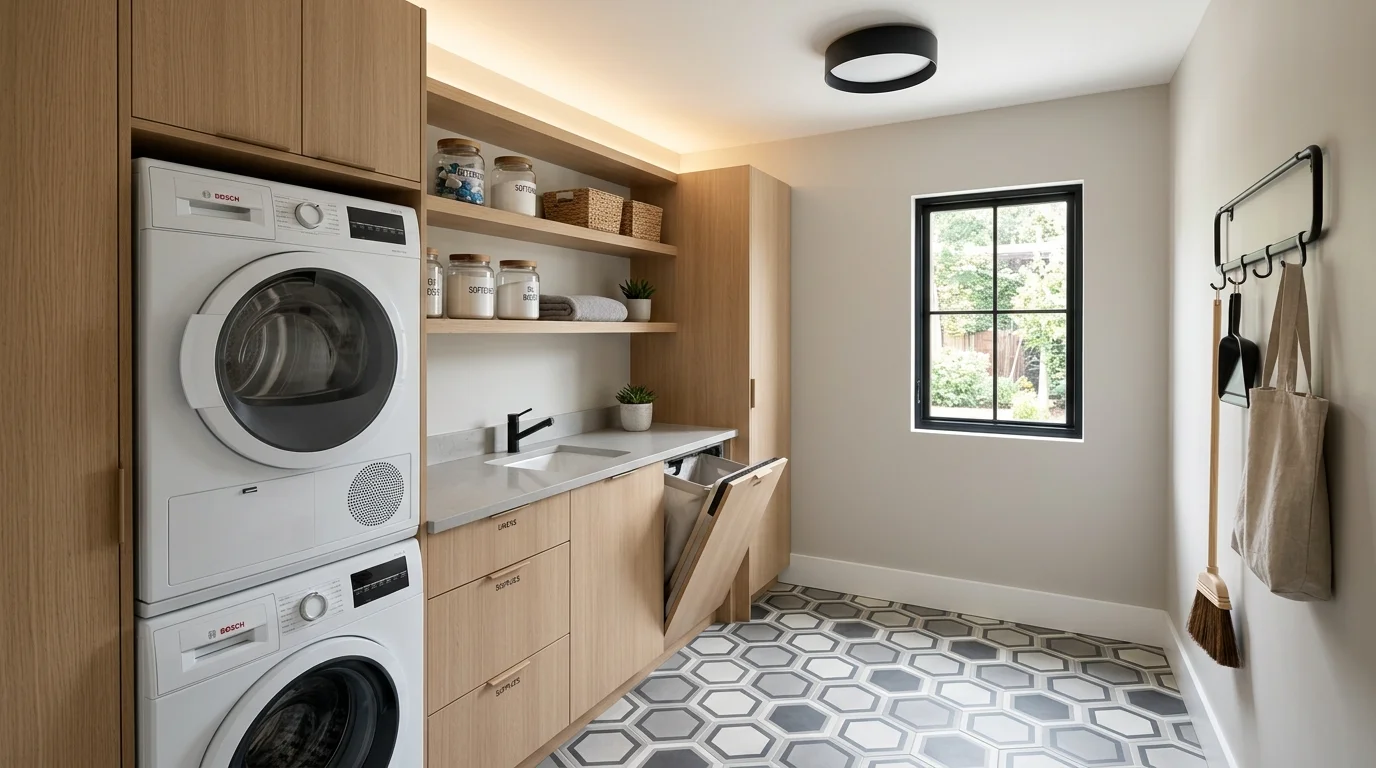
Laundry piles do not wait for a calm weekend. They grow while backpacks hit the floor, sports uniforms come home damp, and someone remembers a needed shirt ten minutes before school drop-off. Good Laundry Room Ideas solve that daily pressure by making the room easier to enter, easier to sort, and easier to reset. For many U.S. homes, the laundry room sits near a garage, hallway, basement stair, or kitchen corner, which means it has to work harder than its square footage suggests. A family-friendly setup is less about pretty baskets and more about removing tiny points of friction. When the detergent has one clear spot, the hamper has a home, and the folding zone is not buried under clutter, the whole house feels calmer. Even simple planning, like learning from smart home improvement resources through practical home organization guidance, can help you turn a messy utility space into a daily support system. The goal is not perfection. The goal is a room that keeps moving when your family does.
Laundry Room Ideas That Fit Real Family Routines
A family laundry room fails when it is planned like a showroom instead of a work zone. The room has to handle muddy socks, lost buttons, school spirit shirts, beach towels, pet blankets, and the one hoodie every kid wants washed first. Design starts with rhythm, not decoration.
How can a family laundry room reduce daily decision fatigue?
A strong family laundry room gives every repeated task a default path. Hampers should tell people where clothes go without a parent explaining it again. Whites, darks, towels, uniforms, and “needs stain spray” can each have a labeled bin that sits where people already drop things.
This works well in homes where mornings move fast. A family in Ohio with three kids in sports may not need a larger washer as much as they need a stain station near the door. When grass-stained pants land in the correct bin right away, the hard part is already half done.
The counterintuitive part is that fewer choices can make the room feel larger. Five pretty containers that all need explanation create more work. Three clear zones that anyone can understand make the room feel calm even on a school night.
Why should laundry zones follow family traffic patterns?
The best laundry layout respects the path people already take. If everyone enters through the garage, the hamper zone belongs near that entry. If bedrooms sit upstairs and the washer is on the same floor, a narrow landing cabinet may matter more than a deep base cabinet.
A mudroom laundry space can carry a lot of weight in busy homes. Shoes, coats, towels, and washable bags often arrive together, so the room should separate clean items from outdoor mess before they collide. That may mean a wall hook rail above a bench, a hamper under the seat, and a shelf for detergent within adult reach.
Many families make the mistake of pushing all storage to the back wall because it looks tidy on a plan. Real life pushes back. A basket placed two steps too far from the door will be ignored, and the floor will become the basket instead.
Build Storage That Works Before It Looks Good
Storage makes or breaks a laundry room, but not all storage earns its space. Tall cabinets, floating shelves, carts, and bins only help when they match what the room actually holds. A busy home needs storage that can take a beating and still look decent after dinner.
What laundry storage belongs within arm’s reach?
The items used every load should sit closest to the washer. Detergent, dryer sheets, wool dryer balls, stain remover, mesh bags, and a small trash cup for lint should not require bending, searching, or moving another object. The best laundry storage feels almost boring because the answer is always in the same place.
Upper cabinets work well for extra supplies, but daily items often belong lower or on an open shelf. A short adult can get annoyed by high cabinets fast, and annoyance turns into clutter. A slim shelf beside the washer can beat a large cabinet across the room.
There is also a safety layer here. In homes with young children, cleaning products need locked storage or high placement. Good design protects the family without making every load feel like opening a bank vault.
How can small laundry room storage avoid clutter creep?
A small laundry room needs firm limits. One shelf for backup products is usually enough. When a family stores six scent boosters, three half-used detergents, and old cleaning sprays “for later,” the room starts acting like a junk drawer with plumbing.
Small laundry room planning benefits from vertical space, but only when the vertical space has a job. A wall-mounted drying rack can fold flat after use. A narrow rolling cart can hold stain tools between machines. Hooks can catch reusable bags, cleaning cloths, and hangers without eating floor space.
The unexpected move is leaving some open space empty on purpose. Families often fill every inch because the room is small, then wonder why the room feels tense. Empty counter space is not wasted space. It is where clean clothes pause before they return to bedrooms.
Make Sorting, Washing, and Folding Feel Less Like a Chore
Laundry feels heavier when every step happens in a different place. Clothes sort in the hall, wash in the utility room, fold on the bed, and sit in baskets for three days. A smarter room pulls the process into one clear sequence, even if the room is small.
Why does folding space matter more than extra shelving?
A flat folding surface changes the whole room. It keeps clean clothes from landing on top of machines, where they slide, wrinkle, and mix with lint. A counter over front-loading machines is often the easiest upgrade because it turns dead air into usable workspace.
Families with top-loading washers can still build a folding moment. A wall-mounted drop table, a movable cart with a hard top, or even a narrow counter on a side wall can help. The point is not size. The point is having one clean surface that stays ready.
This is where many laundry rooms lose the battle. They have enough shelves but no landing zone. Shelves store things, but counters finish tasks.
How can laundry systems help kids take part?
Kids can help more when the room is designed for their height and attention span. Low hooks, labeled baskets, and simple color-coded bins make participation easier. A child who cannot read can still match socks to a picture label or drop towels into the right bin.
A family laundry room should not depend on one person remembering every detail. In a California home with two working parents, a shared system might mean each child gets a basket with their name on it. Clean clothes go into that basket, and the child handles the final trip to the bedroom.
The surprise is that kid-friendly systems often help adults more than children. When the process is visible and simple, everyone stops asking where things go. That saves more energy than any fancy cabinet front.
Add Comfort, Durability, and Design Without Wasting Space
A laundry room can be hardworking without feeling harsh. Durable materials, good lighting, and a few warm details make the room easier to use. The trick is choosing finishes that survive family life instead of finishes that need protection from it.
What surfaces hold up in a busy laundry room?
Laundry rooms deal with spills, humidity, grit, and heavy baskets. Flooring should handle water and frequent cleaning. Luxury vinyl plank, porcelain tile, and sealed concrete can all work in many U.S. homes because they stand up to moisture better than soft flooring.
Countertops also need common sense. Butcher block looks warm, but it needs care near water. Laminate, quartz, or sealed surfaces often make more sense for families that want low-stress cleaning. A pretty surface that causes panic after one detergent drip is not family-friendly.
Durability does not mean the room has to feel cold. A washable runner, warm cabinet color, framed wall print, or wood shelf can soften the space. The room should look cared for, not staged.
How can lighting improve laundry room function?
Laundry lighting should reveal stains, match socks, and make the room safer. One dim ceiling bulb creates shadows behind baskets and inside machines. Bright overhead light paired with under-shelf lighting near the folding zone can change how the room feels at night.
A small laundry room benefits from light paint, reflective surfaces, and clear sightlines. When the room feels brighter, people tend to keep it cleaner because mess shows up sooner. That sounds minor, but visibility changes behavior.
A mudroom laundry space may need layered lighting even more. Entry areas collect shoes, pet leashes, bags, and jackets, so shadows can hide clutter and tripping hazards. Good lighting makes the room feel less like a back corner and more like part of the home.
A laundry room will never be the glamorous center of a house, and that is fine. Its value shows up in quieter mornings, fewer lost socks, cleaner uniforms, and less resentment over one more basket waiting in the hallway. The best designs respect the way your family already moves, then make that movement easier. That is why Functional Laundry Room Ideas matter more than another round of matching bins. They help the room carry real pressure without turning into a daily argument. Start with one broken point: sorting, storage, folding, lighting, or traffic flow. Fix that first before buying anything decorative. Once the room handles the hard part, style becomes easier and more honest. Choose one change this week that removes a repeated frustration, then build from there with purpose. A better laundry room is not a luxury; it is a small act of peace built into the house.
Frequently Asked Questions
What are the best laundry room ideas for busy families?
Start with zones for sorting, washing, drying, folding, and clean-item pickup. Busy families need fewer decisions, not more decor. Labeled hampers, a folding surface, reachable supplies, and one basket per family member can make the room easier to manage.
How do I organize a small laundry room with limited space?
Use vertical storage, slim rolling carts, wall hooks, and fold-down drying racks. Keep daily supplies close to the washer and move backup products higher. Small rooms work best when every item has a job and empty counter space stays protected.
What should every family laundry room include?
A family laundry room should include sorted hampers, stain treatment supplies, detergent storage, a lint trash cup, a folding surface, drying space, and clear baskets for clean clothes. Good lighting also matters because stains and small clothing items are easy to miss.
How can I make a mudroom laundry space more useful?
Separate outdoor mess from clean laundry. Add hooks for coats, a bench for shoes, washable mats, and hampers near the entry path. Store detergent away from muddy items so the room does not mix cleaning supplies with daily drop-zone clutter.
What is the easiest laundry storage upgrade?
A shelf or cabinet near the washer is often the easiest upgrade. Keep detergent, stain spray, mesh bags, and lint tools within reach. This saves time during every load and stops supplies from spreading across counters, machines, and windowsills.
How can kids help with laundry at home?
Give kids simple, visible jobs. Use name-labeled baskets, low hooks, picture labels, and clear sorting bins. Younger children can match socks or sort towels, while older kids can move their own clean clothes from basket to bedroom.
What flooring is best for a laundry room?
Porcelain tile, luxury vinyl plank, and sealed concrete are strong choices because they handle moisture and frequent cleaning well. Avoid flooring that swells, stains, or becomes slippery fast. Family laundry spaces need surfaces that forgive spills and daily traffic.
How do I keep laundry from piling up?
Create a routine tied to real family habits. Run smaller loads more often, give each person a clean-clothes basket, and fold near the machines before clothes travel elsewhere. Piles grow when laundry has no clear next step.